
WATCH my report above with Renee Roberts on the death of actor Robert Duvall. The segment aired Tuesday, Feb. 16 on CTV News Channel
I only met him one time, but it was quickly apparent that you never had to guess what Robert Duvall was really thinking.
Other reporters have similar stories. He once grumbled publicly about having to go to Canada to shoot great American stories, dismissing Canadian actors as “not good.”
The Oscar, BAFTA, Golden Globe and Emmy-winning actor, who passed away Sunday at 95, walked back some of those comments at a 2006 press conference I attended.
This was 20 years ago, when Duvall was before critics in Pasadena, Calif., promoting the 2006 AMC western “Broken Trail.” He was joined at the Television Critics Association press gathering by co-star Thomas Haden Church, whose career had just moved upwards after the movie “Sideways.”
advertisement
Duvall was asked several questions about westerns.
“The one film that I’m most identified with,” he said, “which is the bible for most cowboys that I know, was “Lonesome Dove.” Duvall was proud of his performance in that 1989 CBS miniseries as Augustus “Gus” McRae, and felt it would be “another hundred years” before another cowboy movie could equal it. He even rated it ahead of “all the John Ford movies put together.”
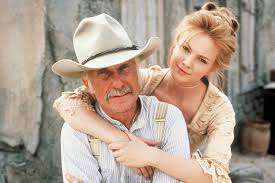
One critic was surprised Duvall would single that TV project out ahead of some of his landmark features, including “To Kill a Mockingbird,” “The Godfather,” “Apocalypse Now,” and his Oscar-winning performance in “The Great Santini.”
Duvall, however, had a special reverence for westerns, an enthusiasm he shared with genuine ranchers he had met. “The American cowboy and the Canadian cowboy and the South American cowboy relate to ‘Lonesome Dove’ more than anything.”
Duvall knew a little about Canadian cowboys. Born in San Diego, Calif., he spent a couple of summers with his brother at an uncle’s Montana ranch just south of the Alberta border. Years later, there were plenty of Canadian cowboys handling 225 head of cattle on “Open Range,” the 2003 western Duvall made with Kevin Costner.
It was that experience which soured Duvall on working in Canada. “Broken Trail,” shot just three years later near Calgary, turned him around again. After that nine week shoot, Duvall had nothing but praise for the cast and crew.
“There are wonderful crews up there,” he said. “They’re equal to any cowboy family on either side of the border. And right after this film was finished, they went up to Edmonton and won the National Championship, the working ranch rodeo of all the ranchers in Canada.”
Immediately after the formal press conference part of the session, Duvall continued to praise the wranglers he met north of the border. He did, however, admit that he liked “Alberta more than the rest of Canada. They’re more like us. Calgary, Alberta, is more like Texas without the accent really.”
As for Canadian actors, “I eat my words,” said Duvall. “The whole cast was wonderful. It was a lovely experience, really.”
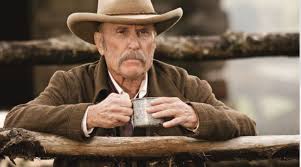
Duvall actually played a famous-adjacent Canadian: publicist [and late, great friend and two-time podcast guest] Bill Vigars. Bill was the guy who ran with Terry Fox on his cross-country Marathon of Hope. Vigars met the actor at the time of the shoot, and it never ceased to amaze him that Robert Duvall played him in a movie.
Haden Church said it was an inspiration to act opposite Duvall on “Broken Trail.” singling out “The Great Santini” and “Mockingbird” as favourite roles. “This is an actor,” said Haden Church, “but this is a man who has tremendous dignity and poise in the roles that he chooses.”
Duvall was respected as a horseman on the set of his westerns. He did most of his own riding on “Lonesome Dove,” “Open Range,” and “Broken Trail.”
Non cowboy roles could be fun too, he allowed. “Of course, ‘The Godfather’ was a lot of fun mainly because Jimmy Caan is fun personified.” He singled out one other actor, William Holden, whom he starred opposite in “Network” (1976). “Terrific guy. Terrific guy. I remember distinctly. Wonderful man.”
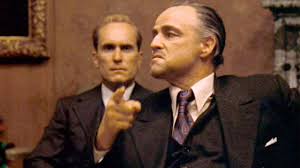
Duvall’s early television credits cut a breathtaking path through several genres in the ‘60s. Sure, there were plenty of TV oaters, including The Virginian and The Wild Wild West, but he also stood out on episodes of The Outer Limits and Alfred Hitchcock Presents. Few actors can lay claim to appearances on both Playhouse 90 and Time Tunnel. He could be absolutely haunting on something as episodic as Route 66, where he made three appearances.
While his wordless role as “Boo” Radley in “To Kill a Mockingbird” (1962) caught Hollywood’s attention, Duvall himself singles out a film made a decade later as one of his finest performances. Written by Horton Foote and based on a short story by William Faulkner, “Tomorrow” (1972) stars Duvall as a lonely Southern farmer named Fentry who cares for a pregnant drifter and years later must deal with the consequences of her grown son. I know one critic who feels that, after watching “Tomorrow,” Billy Bob Thornton should split his Best Actor nomination for 1996’s “Sling Blade” with Duvall.
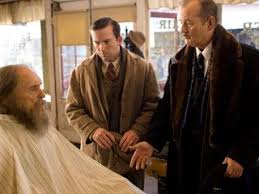
Contrast that sombre role with the wildly comedic one he played 36 years later as the deranged dad opposite Vince Vaughn in 2008’s “Four Christmases.” Duvall spent a lifetime finding authentic moments, funny and sad, threatening and meek, on film and television. He made you believe that he loved the smell of napalm in the morning. Meeting him was intimidating, but he was nothing but frank and friendly on that long ago day, even to a non-Albertan Canadian.