
After a brief theatrical run, the documentary “Paul McCartney: Man on the Run” premiered Friday on Prime Video.
If you are a fan of McCartney’s post-Beatles band Wings, this is the story of that group, which sold a lot of records throughout the 1970s. American director Morgan Neville has distinguished himself with several compelling docs chronicling pop culture high points from the later half of the 20th century. Those award-winning films include the background singer biopic “20 Feet from Stardom” (2014), “Best of Enemies” about the bitchy Gore Vidal/William F. Buckley feud (2015), and “Won’t You be My Neighbor” (2018) profiling the late, great Fred Rogers. A personal favourite: “Respect Yourself: The Stax Records Story” (2007).
“Man on the Run” opens with a dazzling display of visual dexterity. Neville provides a cool little Beatles summary in two or three minutes, with screen images torn away like strips of old posters from a bulletin board. It is clever, imaginative and blessedly brief, given the long and winding road full of Beatles bios over the past five or six years on Disney+.
Much of Man on the Run is rooted in McCartney’s remote farm in the hills of Scotland. This is no Friar Park, the nickname of George Harrison’s Victorian estate in England. It looks like one of the hardscrabble farms one sees driving north up the Bruce Peninsula, except more sheep. The very casual setting makes sense as we learn McCartney and the other Beatles were not as rich as they should have been at the point of their breakup, a predicament McCartney always laid at the fee of the group’s pipe smoking and ultimately disreputable manager, Allen Klein.
It also provided a shield to the mobs of fans who otherwise would have hounded Macca into madness. One of the funniest parts of the film is when drummer Denny Seiwell ventures north in search of McCartney and asks a Scottish farmer for directions to the rock star’s estate. Mr. MacTavish or whoever barks directions through his thick brogue, an indecipherable bleat that would help no one arrive at the neighbouring McCartney’s ram-shackled door.
The film’s premise is this: what does the cute Beatle do for an encore? Drink, apparently, at the start. Linda, their growing family and the sheep helped him Get Back, as did a burning rage over being duped, as he saw it, intro taking the rap for the breakup a year after John Lennon sort-of secretly left the band.
advertisement
The fall out with Lennon is rehashed. We see and hear John ripping McCartney while recording “How Do You Sleep” from Imagine. Here is where the approach Matt Wolf used on Pee-wee as himself might have been more revealing. We hear McCartney talking over that old wound, but we don’t get to see him challenged or squirm.
I could have also done with more contemporary rock star voices in the film. We hear a couple of pithy quotes from Mick Jagger, but Elton John, Keith Richards, Stevie Wonder or even Alice Cooper have been reliable quipsters on other docs over the years. There is a welcome insight or two from Chrissie Hynde of The Pretenders.
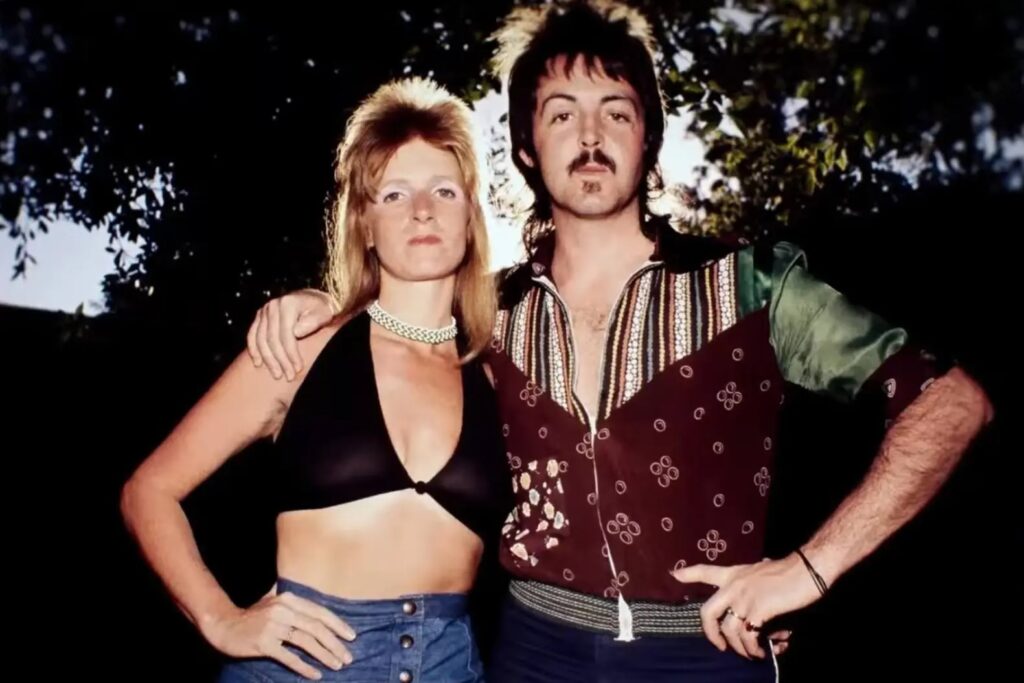
Denny Seiwell, the American drummer heard on early McCartney/Wings albums Wild Life, Ram, and Red Rose Speedway, offers commentary. While he bolted right before the McCartneys and guitarist Denny Laine left for Africa to record Band on the Run, he reconnected with the boss in the last few decades and sheds light on the family atmosphere on the Macca ranch.
I spoke with Laine and, briefly, Seiwell, at one of those Hollywood autograph shows eight years ago in LA. Laine, front and centre on The Moody Blues early hit “Go Now,” stuck with Wings for their entire run (1971-’81). His passing in 2023 robbed this documentary of a key voice.
Fans of the band will enjoy snippets of McCartney’s “Maybe I’m Amazed” here, “Jet” or “Arrow Right Through Me,” there. Neville doesn’t shy away from posting reviews with the words “mediocrity” in the title. Ram in particular was savaged by Rolling Stone and other reviewers in 1971. A half century or so later it is seen as more of a modern, handcrafted classic, as Sean Ono Lennon tells us.
The film has two turning points towards the end. Lennon’s 1980 assassination and McCartney’s ill-advised attempt to tour Japan with a bag of weed in his suitcase. In the later, Neville cleverly cuts to Steve McQueen bouncing a ball into his glove in “The Great Escape” which McCartney talks about his week in a Japanese cell. We see that “It’s a drag” reaction one more time from McCartney when confronted with John’s death. More telling is a archived clip of Linda on Paul stumbling, stunned, into the garden on the horrible news.
While visually stylistic throughout, the ending of both Wings and this documentary is anticlimactic. As for me, I think I’d rather see a film about McCartney’s Third Act, the one where he continues to write hit songs and record album after album, as well as rock on in concert, well into his eighties. Any harping on how he wrote too many popular but “Silly Love Songs” with Wings has to give way to the maturity and range of his later work. What remains is an undeniably prodigious talent, a man still on the run, who continues to enrich his remarkable legacy.