
If you want to see two very different documentaries about comedians in their sixties, watch Marc Maron’s Are We Good? right after watching Eddie Murphy in Being Eddie.
Maron is the one not living in a 100-room mansion. He’s in a modest house, doing his own laundry, baking a pie, changing a tire, heading out to the pet store to feed his cats. Murphy’s doc is a more flattering snap shot of a doting family man at a large dining room table, surrounded by a dozen or so kids.
Both offer unique portraits of building a career in comedy. Murphy’s story is about surviving explosive, unprecidented fame and success at a very young age. Maron’s Are We Good? (streaming now on AppleTV) is more about surviving himself. He has crafted a very public career out of candidly dissecting his own inner demons as well as tackling harrowing, personal grief. The good news is his journey travels through darkness to ultimately get to the light.
“Are we good?” is a phrase Maron often used in the opening remarks on his WTF podcast. That series, which recently concluded a 16-year, close to 1700 episode run, was a bi-weekly dose of truth. It was recorded in his Glendale, Ca., garage, and became comfort food for millions of faithful listeners. Before introducing each guest, he would do a mental health check by bringing us up to date on his own delicate psyche. It was often the most electric part of each show.
Today podcasts are everywhere; even I have one. Maron, however, was a true podcasting pioneer. He began the venture as a way to make amends with other comics he has pissed off in year’s past (including, quite memorably, Louis C.K., Jon Stewart and Whitney Cummings).
“I was devastated from a divorce,” he says on the doc. “I was emotionally drained. I didn’t really have a future that I could see as a comic, and that was part of the beginning of the podcast.”
advertisement
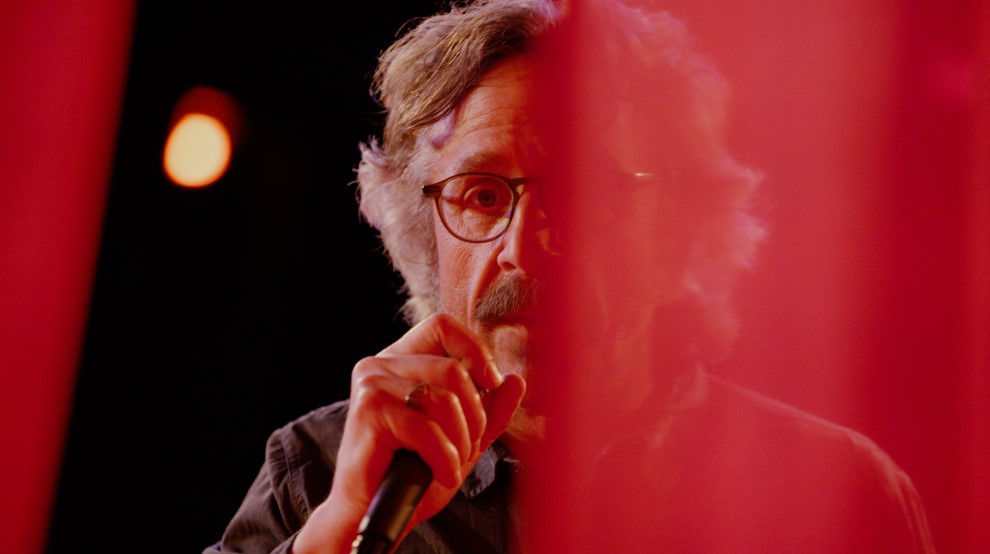
The documentary, directed by Steven Feinartz (The Bitter Buddha, Marc Maron: Panicked), mirrors the New Jersey-born comedians’ own relentless inner pursuit to happiness. It, too, is raw and honest. Cameras stalk Maron throughout the COVID era. He is occasionally grumpy about the process, somewhat reminiscent of how Paul Reubens felt surrendering control over his own story in the award-winning doc Pee-wee as Himself.
Maron, we learn, didn’t have the best role model in terms of comedy mentors. He talks briefly about his early comedy club days in the dark shadows of Sam Kinison. So much booze and drugs were consumed, he says at one point, even the dealers were advising him to get out of LA. Maron migrated between New York and LA, a road that took him to sobriety at last in 1999.
He tried working for others on various radio and cable ventures but only found success when he gambled on himself. He defines his podcast with six words: “the audio diary of one man.” The documentary is the video version, and hops all over the place. We visit his doctor father Barry, a man in the early stages of Dimentia. There is rage and tenderness there, all fodder for his act but also relatable to a generation of parental care givers.
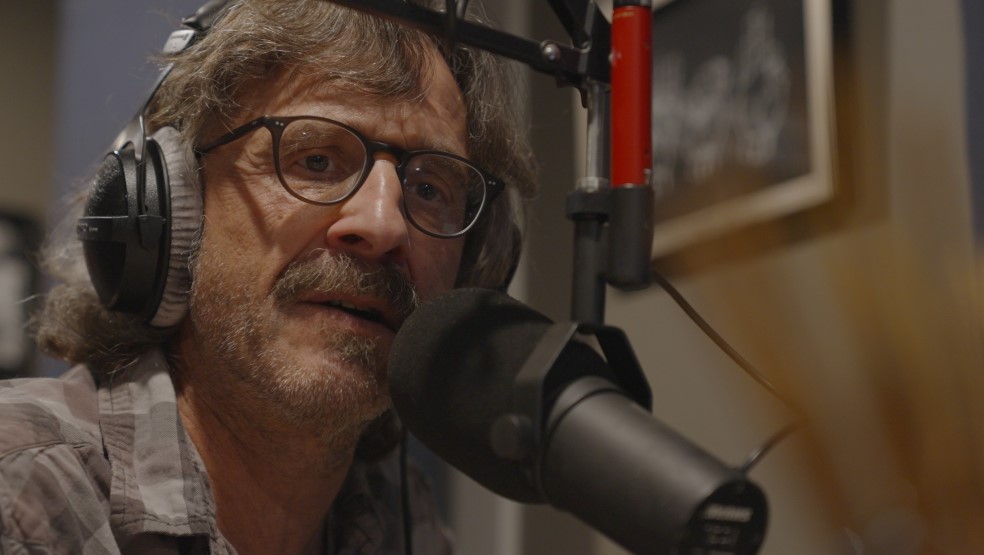
We also see Maron at various performing meccas, including The Comedy Store in LA and a visit to Just for Laughs in Montreal. In between are darting, insightful testimonials from friends such as Patton Oswalt, David Cross, Jeff Ross, and his podcast partner Brendan McDonald. Clips from appearances with Conan O’Brien and David Letterman are also featured.
After two failed marriages, the relationship that turned his life around was with director Lynn Sheldon. They met on the set of GLOW, the retro blast of spandex series where Maron shone as the disgruntled man in charge of a troupe of female wrestlers.
Here, though, was also heartbreak. After this blast of domestic and personal bliss, Sheldon died suddenly from a rare blood clot. Her death came as the world shut down during the worst days of the COVID pandemic. The stunt-heavy series was also derailed as impossible to shoot in times of isolation. Maron hung on, pouring out his grief on the podcasts.
This had to feel like piling on for Maron. In earlier days, he is shown suffering backstage while the comedian ahead of him is killing it. “I feel like I need to un-pump you,” he tells the audience once he hits the stage. He grimly jokes about, “delicately working on my sad fucking act.”
Maron is not the world’s first insecure comedian. It is not a career path for the faint of heart.
Yet you can see why he does it. We’re all a little bruised, and the outreach from audiences at the end of various stage performances seems telling. There seems to be an exchange of healing that goes beyond the laughter and applause.
Maron could never be accused of charming a reaction out of an audience or out of colleagues. The love he gets back is hard-earned, At some performances, he almost dares you to stick with him.
The documentary shows, however, that in this age of fake news, his clear-eyed take and hard truths are what audience are craving to hear. Even better, Maron, seems to get, after decades as an alternative comedy act, that at 62 he is at the top of his game as a mainstream comedy craftsman.
The documentary doesn’t hammer home this point, it lets you arrive at the happy ending. Look at the evidence: his recent HBO stand up special, also directed by Feinartz — Marc Maron: Panicked — was a hit. His acting career is flourishing with parts in several current projects, including “Springsteen: Deliver Me from Nowhere.” His final podcast featured a pretty amazing “get”: a return visit from President Barack Obama.
So when he asks, “Are We Good?” at the end, the answer is yes, Marc Maron is very good, and so is this documentary.
Are We Good? is available now on Apple TV and Amazon VOD.