
I have a confession to make: The original Star Trek launched on its three year mission in 1966. As a young lad at the time, I never got into it. It seemed too soapy for me, and also that men in pajamas thing. I was more into Batman and Lost in Space. How would I know Kirk and Spock would launch television’s all-time No. 1 franchise?
Over the years, I’ve joined other critics on visits to the Los Angeles sets of Star Trek Generations and Voyager. I walked through one with Rob Salem, then covering the beat at the Toronto Star. He was shaking, like we were at Lourdes, and made me take a photo of him standing in 7 of 9’s teleporter or bed or something.
Picard (Sir Patrick Stewart) from Next Generation was my First Officer Sandra’s captain. In recent years, we watched Star Trek: Discovery together, and loved it. It just seemed impressive, a movie every week in terms of visuals and sound, with great actors (especially the women, Sonequa Martin-Green and Michelle Yeoh). It lost me in Season three, however, when it jumped forward a thousand years and Yeoh went on to do movies.
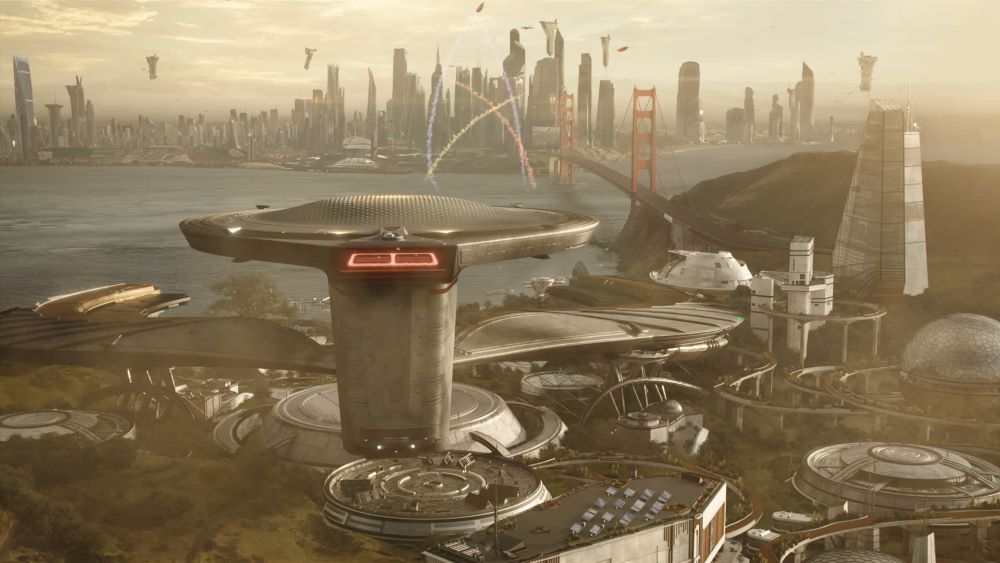
Which brings me to Star Trek: Starfleet Academy, streaming now on Paramount+. A second season has already been ordered and is in production in Toronto. Based on the first two episodes, it looks amazing and takes television production values to a whole other level. The detached, moth-wing design of the new starship, all the robot critters whirring about as window washers, etc., this is next level Trek.
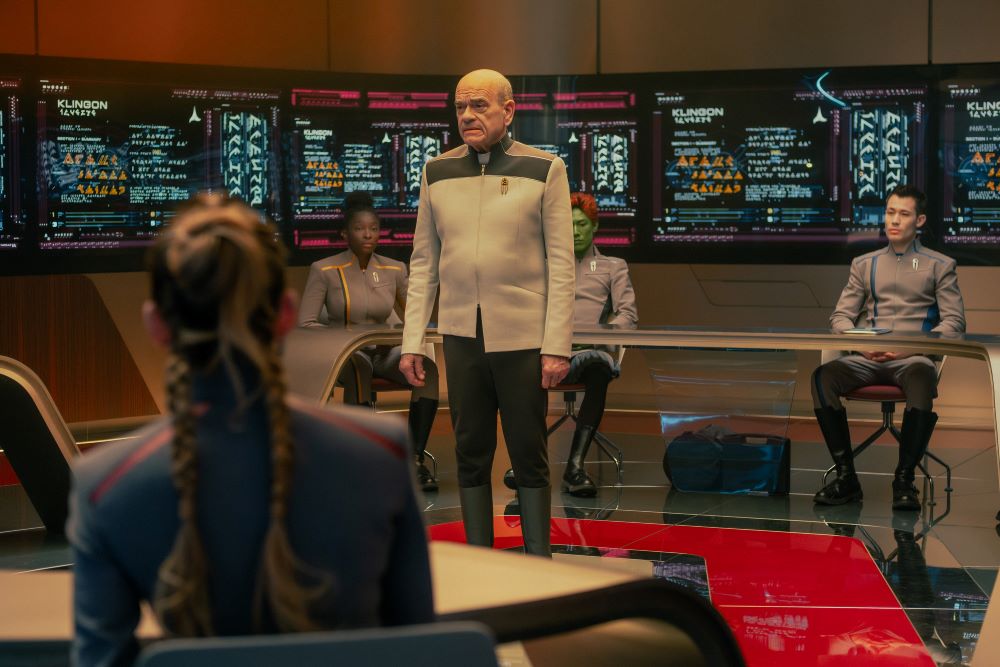
I especially like the retro-future look inside the ship. Set in the 32nd century, there is, for me, a familiar look to the signage and back-lit controls on the flight deck and elsewhere. It reminds me of the McLaughlin Planetarium in Toronto in the early ’70s, where every white T-shirt lit up under the purple black lights.
This is the 12th Star Trek series if you count all the animated ones, and the latest as part of executive producer Alex Kurtzman’s vision. Gala Violo, who wrote the pilot, is listed as creator. Now, I’m not steeped enough in Star Trek lore to get comments from the faithful that “it is too Kurtzman” or “not enough Roddenberry” (as in Gene, the original Star Trek sage). I’m just responding to it as entertainment. Is this series worth recommending to others.
advertisement
That would be yes. The first episode seems long, and as pilots go, is burdened with too many character introductions. The concept, however, is simple: after a long period of war throughout the universe (known as “The Burn”), the Federation is rebuilding, and have opened an Ivy League space school in hopes that there will be new Kirks, Picards and Janeways among the various species.
To stock this school with both administrators and students, the producers beamed aboard a cast of veteran, award-winning actors to lure in my generation, as well as an appealing group of young actors to lock in Gen X, Y and Z.
Academy Award-winner Holly Hunter, 73, seems like a strange choice on paper to command a space opera. As Nahla Ake, the chancellor of Starfleet Academy, she reminds me, and I hope the retiring CBC boss will forgive me, of this week’s brioux.tv: the podcast guest Barb Williams (if you add hair extensions). Hunter, however, seizes the role. Like Barb, she’s believable as a good-in-a-crisis leader, but she also curls up like a cat while seated in the captain’s chair (not sure if that’s Barb).
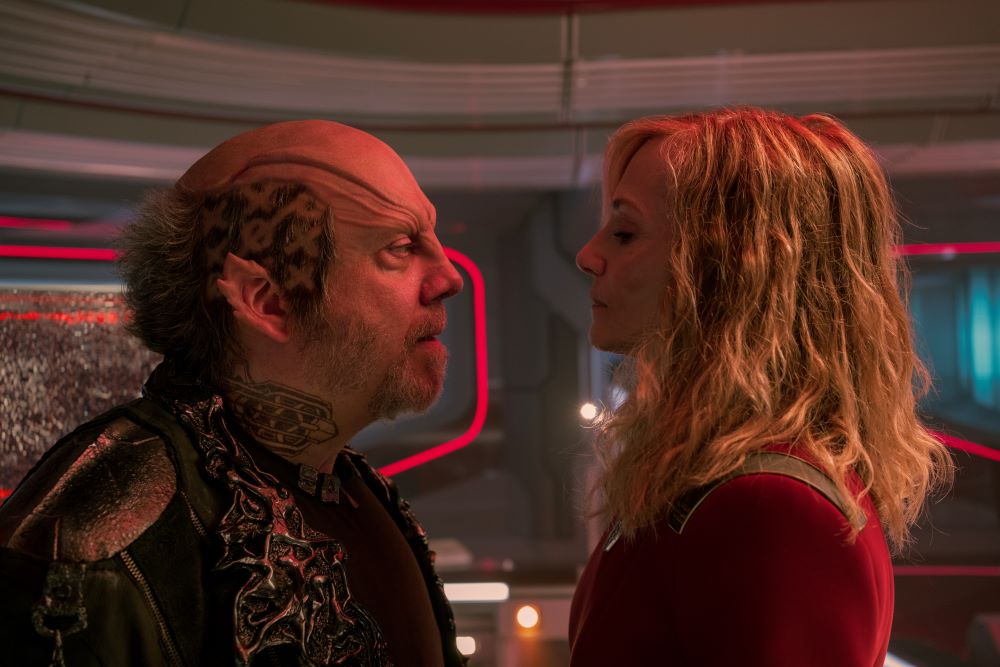
The first villain as the series starts is played by Emmy award winner Paul Giamatti as Nus Braka. This is good Nus, with Giamatti chewing the flight deck to bits as a part-Klingon, part-Tellarite baddie bent on revenge against Nahla as well as one of the young recruits (more on him later).
Oded Fehr, effective as part of the Discovery cast, plays commander-in-chief of Starfleet. Gina Yashere brings menace and humour as Lura Thok, Starfleet’s part-Klingon first officer. Robert Picardo, memorable from Star Trek Voyager, plays a 900-year-old holographic teacher (pretty sure I had him back at Michael Power). Another Discovery hold over, Tig Notaro, is instructor Jett Reno, a great name if you are in the whirlpool repair business.
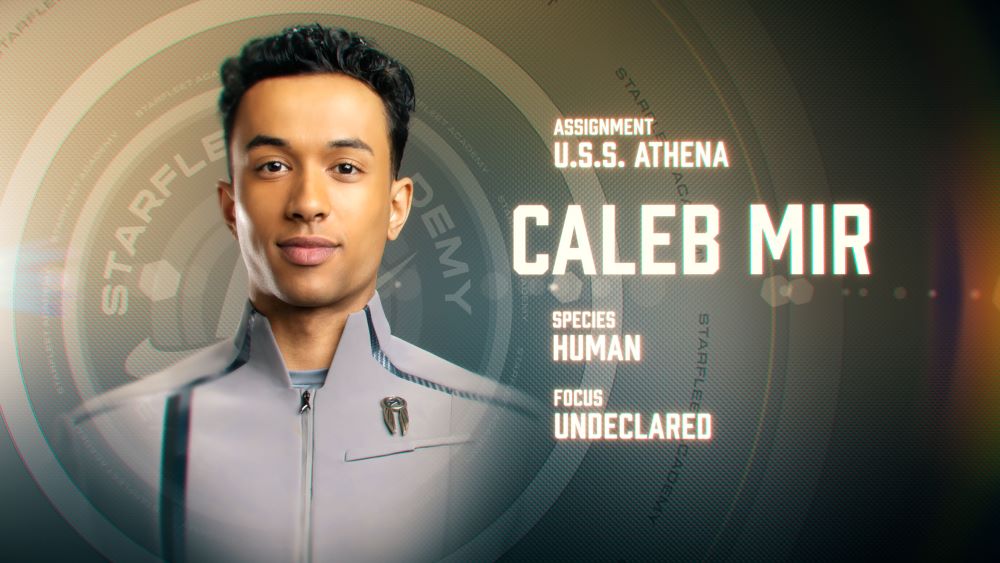
The standout among the new kids is Sandro Rosta as brainy and brooding space brat Caleb Mir. His hard luck orphan story opens this series. Born in Manchester and raised in Toronto, Rosta carries the series as the young human outsider dragged against his will into the Academy. He stands on his own opposite both Hunter and Giamotti (in an earthling vs half-Klingon fist fight that apparently took place without doubles).
He also shows a tender side opposite Zoë Steiner, a young Australian who beguiles Caleb as Tarima Sadal. The two have a few Romeo and Juliette moments in episode two, with Tarima, the daughter of the stuffy leader of a group of Federation hold outs known as the Betazoids. (Reminder: if you suffer from Betazoids, take Fed-actin.)
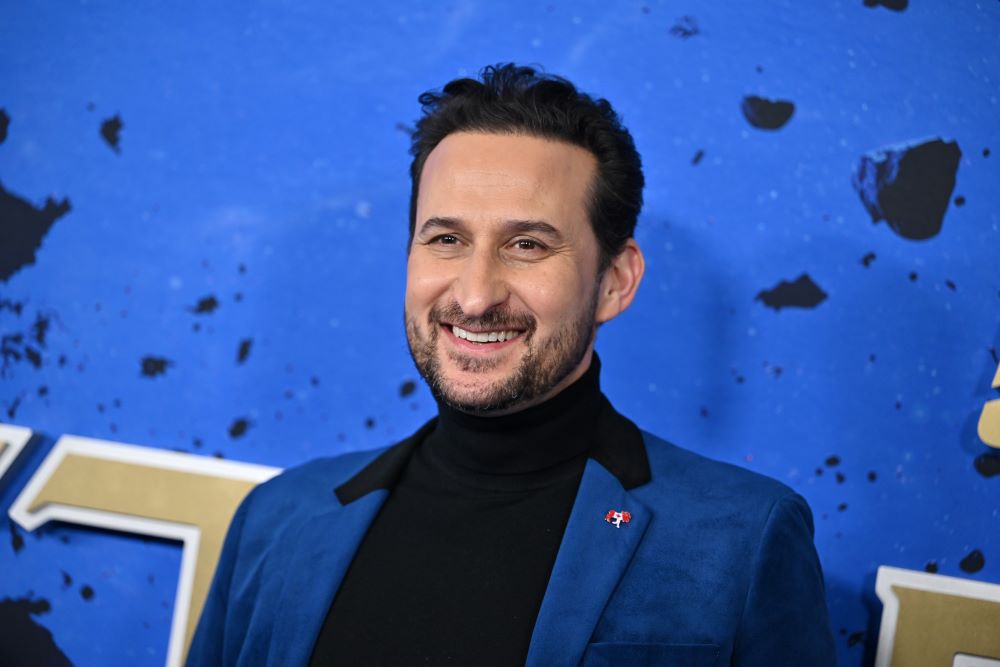
Among the other Canadians in the cast is Raoul Bhaneja (above) who plays Chancellor Kelrec, head of the Starfleet’s War College. The veteran Canadian stage and screen actor has plenty to say about the making of Season One as my guest on an upcoming episode of brioux.tv: The podcast. Saskatchewan native Tatiana Maslany (Orphan Black) plays Caleb’s young mother in the early scenes.
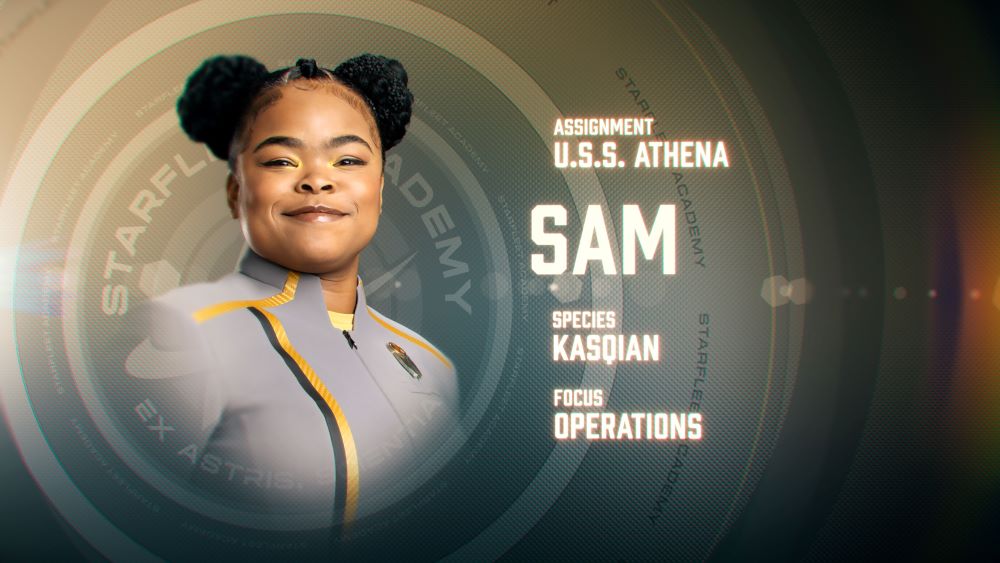
Among the other young recruits are Kerrice Brooks, who stands out as SAM, a Kasquin hologram that is only weeks old and thus refreshingly sunny and naive. Karim Diane is Jay-Den Kraag, a tall Klingon cadet. He apparently reached out to actors who have played Klingons in the past, including Next Generation‘s Michael Dorn and Discovery‘s Doug Jones. The homework paid off as he strikes just the right tough yet emotionless tone.
There are so many other layers to this cast. That is Stephen Colbert’s voice that can be heard providing daily announcements to the Starfleet cadets. Good that he has something else lined up already.
Fans of the franchise will no doubt love all the Easter eggs and other nods to the past. Throughout this academy there are Captain James T. Kirk wings and other signage saluting past leaders. There is something of a modern sports motif on the walls, with 3-D pennants celebrating past glories. The cadets even seem at times to sport home and away uniforms.
The real colour however comes from the cast. I loved this rainbow coalition of species on Star Trek: Starfleet Academy. There has already been push back, however, from such noted television critics as Elon Musk and Stephen Miller. All too predictably, they found the diverse makeup of the Starfleet cadets “too woke.” These cadets aren’t just black or white, the architects of ICE whinge, they’re bright green, purple and blue. Some are black and white!
I tend to side with this recent headline in The Globe and Mail: “Star Trek: Starfleet Academy is a much-needed pop-culture defence of the humanities (and Klingonities, and Vulcanities …).”
The incredibly diverse, multi-species nature of the interplanetary characters seems right in step with Star Trek creator Gene Roddenberry’s original vision for the series. Forget Vulcans; back in the Cold War years, Gene placed a Russian (albeit one with a Beatles haircut) on the flight deck of the Starship Enterprise. As Spock would say, “Fascinating.”
Whatever the colours, it all looks out of this world on my 65-inch Samsung. Bhaneja, who saw the pilot on large, cinema screens at the New York and Toronto premieres, says it looked even better in a theatre setting. I will be keeping tabs on the rest of the season’s 10 episodes but, so far, if you’re thinking of giving Starfleet a sampling, “make it so.”