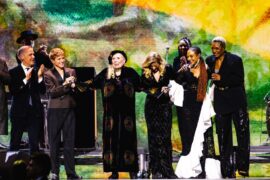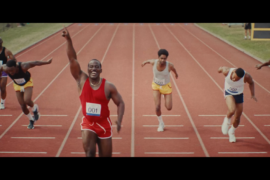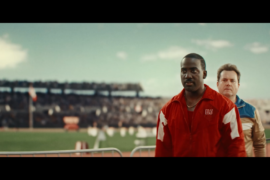

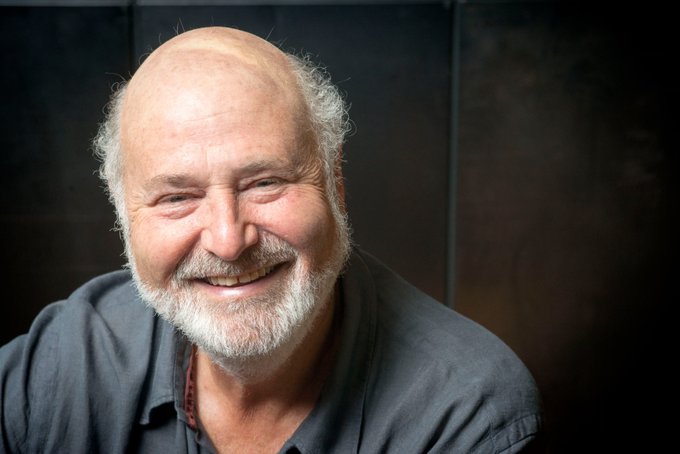
UPDATED. When the world goes mad, you have the clowns to give you hope in humanity. John Candy, rising like the warmest summer sun with the recent release of the documentary John Candy: I Like Me. Dick Van Dyke, also beloved. He made it to 100 Saturday, and young and old felt their hearts lifted up to the highest height.
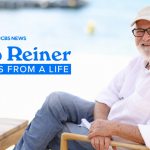
Then, a horror no one saw coming. Rob Reiner and his wife Michele presumably murdered Sunday in their own home? Possibly by a family member? It’s like somebody killed hope.
Reiner, 78, grew up around Van Dyke; his dad Carl created The Dick Van Dyke Show, and teenage Rob used to get up to mischief on the set. Rob’s dad also directed Candy in “Summer Rental.” For the love of God, somebody please hide this news from Van Dyke; shield him from CNN.
The comedy pool is not bottomless, not at this level. You hear the news and you fear for Mel Brooks, left to grieve two generations of beloved friends. You feel for Steve Martin, thrown in with Reiner as two young punk writers on The Smothers Brothers Comedy Hour. Together they tilted television toward a new frontier. To further close the loop, Martin would later be directed in three films by Rob’s father Carl.
Reiner’s best friend at school was Albert Brooks. He was married for 10 years to another comedian-turned-director, Penny Marshall. He was born on the comedy bus, and later drove it.
You try to find solice in what Rob Reiner did with his time on the planet. At 23, he vaulted to fame as “Meathead” on All in the Family; Reiner went from the game-changing variety show to a sitcom landmark. He was the perfect generational foil for Carroll O’Connor’s Archie Bunker. It wasn’t until Reiner and Sally Struthers (as the daughter) were cast in the third pilot that CBS finally greenlit the series.
advertisement
He acted in other things. I have a 16mm film print of an episode of The Partridge Family where he plays a hippie biker who flirts with Lori (Susan Dey) Many would be content to just keep doing that.
Instead he became an admired and bankable director and had a string of hits that would play forever on AMC, TNT and other cable networks: “Stand By Me” (1986); “The Princess Bride” (1987); “When Harry Met Sally” (1989); “Misery” (1990); “A Few Good Men” (1992). That’s five in a row any director would cherish. His first film was “Spinal Tap.” His last film was the just-released sequel, “Spinal Tap: II: The End Continues.”
His production company, Castlerock, was behind both the TV hit Seinfeld and the treasured movie “Shawshank Redemption.” Let that sink in.
Father and son Carl and Rob both attended, on the same day but at different sessions, one of the Television Critics Association LA-based press tours. I chased after both and asked them individually to name what they considered the other’s best film as a director. Rob singled out his dad’s 1984 film, “All of Me” starring Martin and Lily Tomlin; Carl answered with pride and without hesitation, “The Princess Bride.”
Rob kept a hand in television production. I told him at another TCA function that I was a big fan of a summer series he created that flopped, Morton & Hayes. The handful of episodes were supposedly “lost” two-reelers from an Abbott & Costello-like comedy team. A friend I grew up with in elementary school in Etobicoke, Dan Redican, auditioned for one of the parts. (Dan didn’t get it, but was part of a real comedy troupe, The Frantics, and was a writer and producer on The Kids in the Hall.)
Reiner lit up when I mentioned the series, saying making it was his favourite TV experience ever. [What wait — better than The Smothers Brothers and All in the Family??]
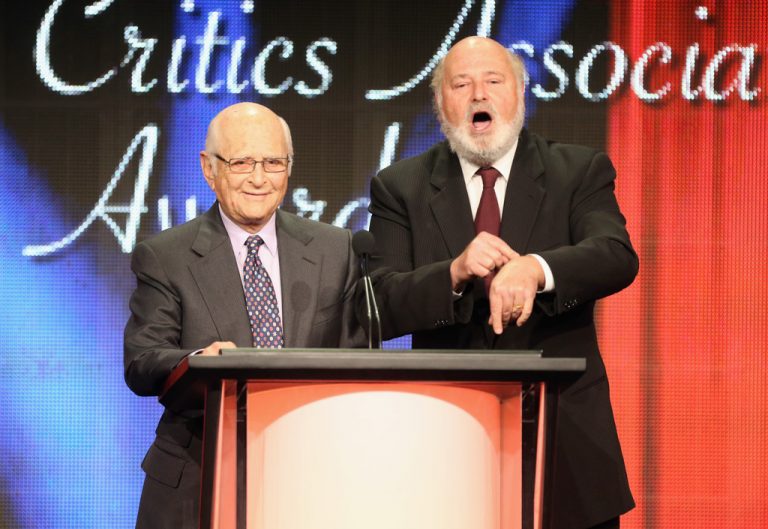
At yet another TCA gathering, this time to accept awards from critics, Reiner shared the podium with his old boss, and social activist mentor, comedy legend Norman Lear. The two did a bit, reading an actual transcript fro the then just released White House recordings of Richard Nixon, with Reiner as the president and Lear doing White House stooges Haldeman and Ehrlichman. The actual exchange was about Nixon’s dislike of an All in the Family episode which apparently made the second most disgraced president uneasy.
Lear sprung the idea on Reiner on their way to the hotel. Reiner apologized for not having a Nixon impression, offering instead to do Lee J. Cobb from Twelve Angry Men. He nailed it.
Over the years, Reiner earned a reputation as a Liberal firebrand. Like his dad, and Lear, and Martin, and Van Dyke, he was disgusted by how America had devolved politically and socially. Like the others he let the world know it on Twitter. One of his final tweets: “Many people are devastated by what’s happening to our country. My uncle was part of the D-Day invasion. My wife’s mother was the only one of her family to survive Auschwitz. Millions died to make sure that nothing like that would happen here. If we all stay vigilant, it won’t.”
He was just as outspoken on Real Time with Bill Maher or on CNN. He urged others to stand up and speak out against bullies in power.
He should be remembered not for how he died but for how he lived. He was fearlessly funny. He was a patriot who loved his country and saw the values handed down by his parents slipping away. He did not make films for the Left or the Right, he just aimed at the heart or the funnybone.
He sounded so happy and at peace in a recent podcast conversation with Ted Danson. It is worth a listen; Reiner called it his best interview ever.
Little is known about the couple’s violent end as of this writing, although the truth may be even sadder than imagined. What is known is that it is heartbreaking. Condolences to the Reiner children, other family members, and friends. Of the tributes flooding in, the phrase, “a good man” keeps being emphasized.
The final lines of “The Princess Bride,” spoken by the grandfather (as written by author William Goldman), are, “Life isn’t fair. It’s just fairer than death, that’s all.” Reiner made the most of his life and enriched all of ours in the process. Let that be the story that goes on. To quote Peter Falk from the film, “As you wish.”