
In the very early days of television, there was nobody bigger than Sid Caesar.
On Saturday nights in the early 1950s, Caesar’s program, Your Show of Shows, prompted millions of Americans to buy this new-fangled device called a television set. Your Show of Shows, a rollicking variety that combined satire (mostly unfamiliar to American audiences) and manic comedy, proved so popular that Saturday nights were changed. Previously a night to take in a show or host a card party with friends, Saturday became Your Show of Shows night. Broadcast live with no reruns, if you missed Your Show of Shows, it was gone forever.
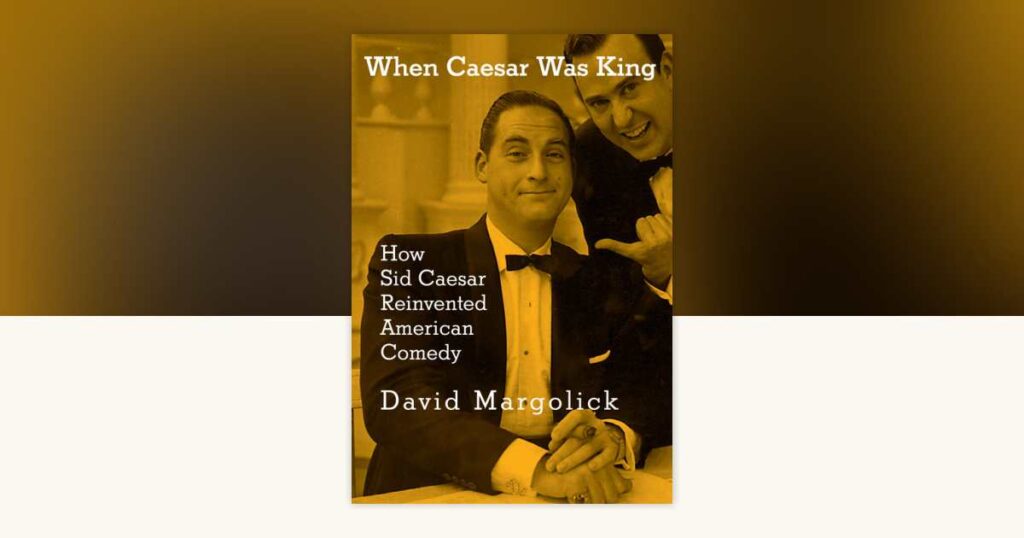
David Margolick’s fascinating biography/social history book When Caesar Was King (Random House Canada) reveals in deeply researched details the mercurial rise of Caesar, and his genuinely tragic fall, while revealing the schism between sophisticated East and West Coast Americans and the ‘hicks from the sticks’ in so-called Middle America.
Your Show of Shows was very New York, and very Jewish. Everyone in the cast, and the writers (which would include Mel Brooks, Carl Reiner, Neil Simon and others) were universally Jewish. Although the program shied away from anything overly Jewish, Margolick writes that everything about the show reflected the Jewish mindset of the cast and crew.

For five years, Caesar’s show was a sensation, an audience smash, and beloved by critics. Caesar was well compensated for it, and he had no problems with spending it. He lived a wildly lavish lifestyle – Cadillacs, the best cigars money could buy, a glorious Manhattan apartment and, tragically, booze. Lots and lots of booze (and later, lots and lots of pot). As Margolick details, Caesar was an extremely difficult person. An introverted, insecure alcoholic prone to fits of rage and binge eating, Caesar seemed to have no real friends. Many on his staff were genuinely afraid of him; the worst experience for anyone was to be in an elevator with Caesar.
While a show of such intensity was bound to burn out, another entertainer proved to be the catalyst for its demise – Lawrence Welk. The painfully corny accordionist was put up against Caesar on ABC, and crushed him in the ratings. Middle America had spoken, and the network listened.
advertisement
Caesar had another program, Caesar’s Hour, which was also a hit, but to a much lesser degree. When the plug was pulled on Caesar’s Hour, so too was Sid Caesar’s career. The comic hailed by a generation as the greatest comedian TV had ever produced was reduced to poorly received plays and bit parts on sitcoms. The final chapter of When Caesar Was King, aptly titled Bottoming Out, is painful reading
Culled from hundreds of newspaper and magazine articles and interviews, When Caesar Was King paints a vivid picture of the early days of an industry that would change society, and the man who was hailed as the greatest comic of his era. Fans of television history – and the history of the 1950s in particular – should find When Caesar Was King to be enlightening reading.