

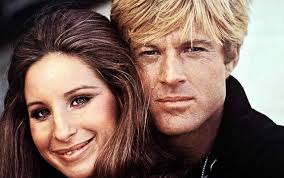
“Memories,” the tune from “The Way We Were,” probably came back to many fans of Robert Redford on news of his passing. An Oscar winner as a director (1980’s “Ordinary People”), Redford passed away in his sleep September 16 at his home in Provo, Utah. He was 89.
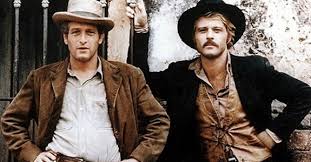
Redford, of course, is best remembered for his movie roles, especially opposite favourite costars Paul Newman (“Butch Cassidy and the Sundance Kid”; “The Sting”), Barbra Streisand (“The Way We Were”) and Jane Fonda (“Barefoot in the Park”; “The Electric Horseman”). Films he made in the ’70s such as “All the President’s Men” and “Three Days of the Condor” remain as entertaining now as they were then.

Like many of the top film stars of the ’60s, ’70s and ’80s, Redford’s early career was in television. He could be spotted in shows such as The Twilight Zone (1959-64). Charles Bronson, William Shatner, Billy Mumy, Burgess Meredith, Dick York and Lee Marvin all found their feet in that Rod Serling series. Redford reportedly had a shot at playing one of the two leads on Route 66 (he did appear in one episode). Westerns such as Maverick and The Deputy are among his earliest TV credits. He also guested on Perry Mason, Alfred Hitchcock Presents, Dr. Kildare and The Untouchables.
I spoke with him when he appeared at a Television Critics Association press tour to promote the 10th anniversary of Sundance TV in 2006. His mere presence as a legit movie star made this a “must see” TCA session. I remember one colleague saying at the time, “that “Only Robert Redford could get away with wearing brown shoes and a blue suit.” Keep in mind that TV critics are pantless when it comes to judging fashion trends.
Fact is, Redford was by far the best-dressed person in the room. That he might be judged on his looks probably dogged him for life. When I played back what he said to us that day, it was smart, focused and very forward-thinking. Given what he said, I thought he didn’t have to be so good looking.
As the founder of Sundance, Redford told reporters he was “trying to create an opportunity for artists to have a place to work, experiment, and grow without having a sense of failure if it didn’t work the first time.” He wanted to give others the kind of creative start he enjoyed with television in the ’50s.
advertisement
“I did the last Playhouse 90 that was ever done,” he told critics, “and that was thrilling because that was an anthology of the best literature you could find with the best talent: directing, writing. And it went out after that, Rod Serling along with it. So I always felt bad that a certain part of television went away.”
One of his ideas for the Sundance Channel was to “take artists like myself — I would do it in a flash — and do short stories and put them on as originals on the channel and say every artist has a short story.”
Television, and the world, has changed quite a bit since Redford spoke to us in 2006. Cinemas were still a thriving business. Marvel superhero movies and other blockbusters were about to seize the theatrical distribution model until COVID drove us all into isolation. There were no streaming platforms then, but Redford was asked if he thought DVDs might choke off interest in indie film fests.
“Well, it’s a new opportunity; therefore I’m really for it,” he said, embracing the notion that putting films directly into the hands of consumers “prevents too much of one-party control.” Redford could not have foreseen the explosion of content flooding onto hand-held devices, but he wanted artists to have access to whatever screens might pop up in the future.
Politically, Redford seemed to have a sense of the sea change that was coming, and not all for the better. He noted that his home base, for himself and his festival and channel, was Utah, a place of “political conservatism.” Yet here were these independent thinkers descending on Sundance, looking to make independent films– and Redford was encouraged at the time by the diversity of expression they represented.
“It’s a personal opinion that I object to, red states and blue states, because we’re the United States,” he said. “So it feels like more divisive tactics to me that don’t do the country any good.” He saw changes in America’s heartland due to “issues like outsourcing, the economy being cut back, job losses, mergings…” and how that was impacting places such as Michigan.
Redford was proud of a number of Sundance shows that explored some of those small town America changes, including the 2007 documentary series Nimrod Nation. “And when you see the spirit that remains that centers around this basketball team, which is a losing team, but the spirit — everybody comes; they drive from miles away to come down to support these kids and this team — it’s very touching, it’s very moving. It’s almost like somebody is trying desperately to hang onto a part of the American spirit that used to be more widespread. And as that shrinks, there’s kind of a sad desperation to it. And I think we just want to document that.”
In an explosively partisan era, Redford sounds wildly optimistic. He even admitted it at the time. Still, his goal with Sundance was to help a new generation of free thinkers turn their camera on America, “that we might help the cause, or at least document something before it is gone.”
He also felt free to sound optimistic, out loud, to a room full of reporters, secure in the belief that he was living in a country where that would always be his right.
“I wondered whether politically we would offend anyone,” he mused. “On the other hand, when you’re promoting diversity as a virtue, you’re promoting a democratic principle. And I guess I just had faith in that.”
Misty, water coloured memories of the way we were. Condolences to his family, friends and all the free thinkers he encouraged.