

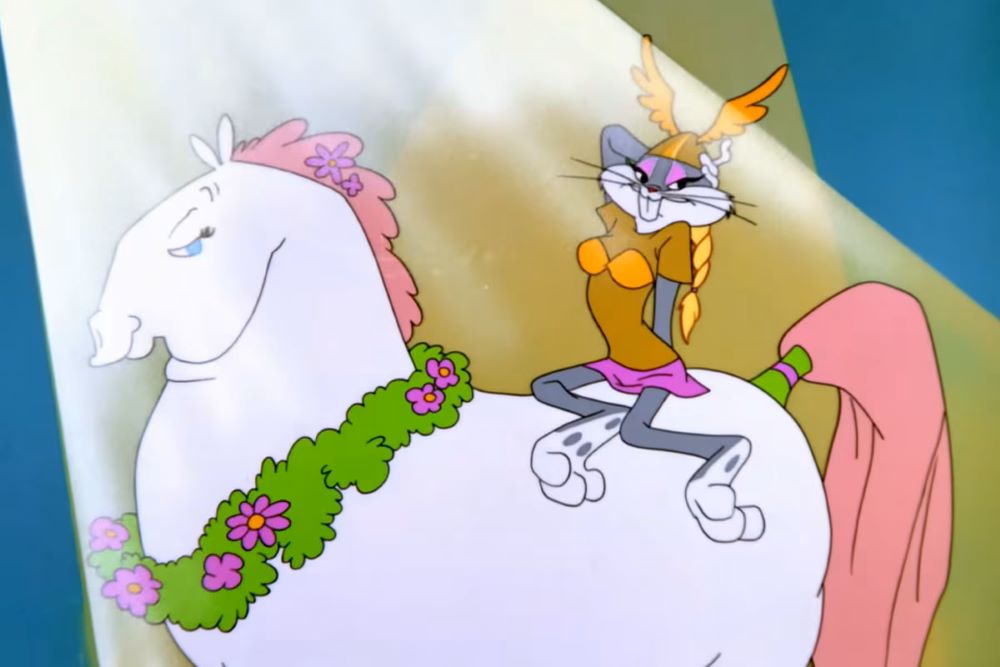
What’s up doc? Well, starting tonight, Turner Classic Movies will be showing classic Warner Bros. Looney Tunes from the 1940s and ’50s. Sufferin’ succotash!
If you are a regular viewer of TCM, you may have caught a few cartoons among other short subjects between features. The best ones they ran up till now were the classic, Max Fleischer Popeye cartoons made for Paramount in the ’30s and ’40s, especially the black and white ones with the slamming ship door titles. Otherwise you might get a vintage MGM ‘toon featuring mischievous mice from Hugh Harmon and/or Rudy Ising, who together had one of the most memorable collaboration names in animation, Harmon-Ising.
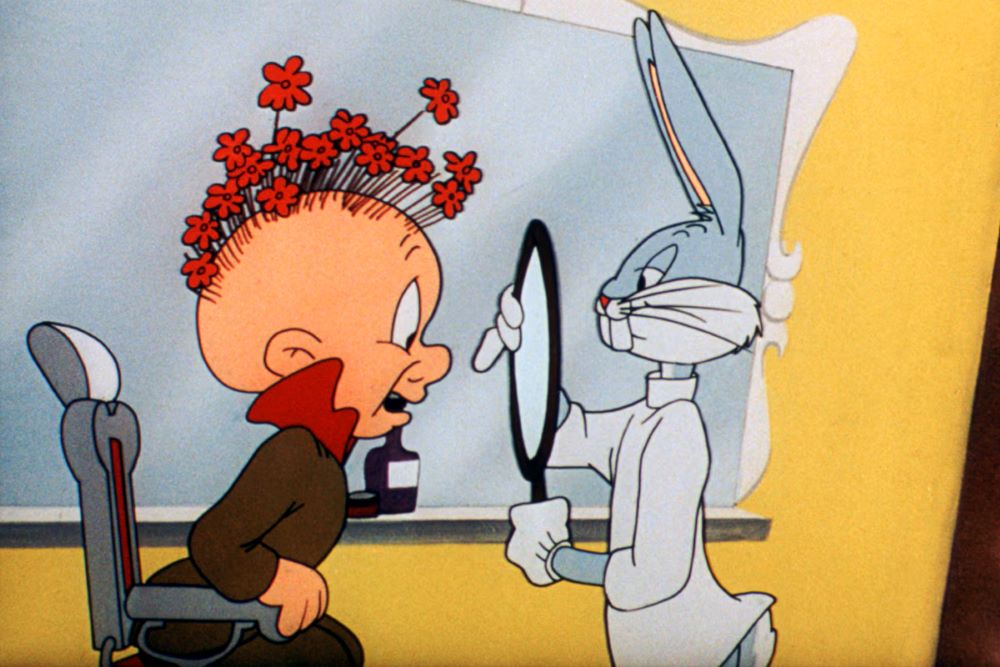
What was always missing, however, was the wilder, delightfully idiosyncratic cartoon shorts from Warners. The early Paramount Popeyes and especially the Betty Boops might make you ask what the heck were they smoking back at that New York-based studio with all that Cab Calloway jazz and reefer references. The great Warners directors — Tex Avery, Bob Clampett, Friz Freleng, Chuck Jones and others — invented a whole new comedy vocabulary. Much of it was fueled by radio references and early silent and sound comedy shorts. These artists distilled, bottled and sold their concoctions it to wartime audiences looking to escape a world plagued by fascist dictators. Like today’s audiences, these folks needed a good laugh in the dark, and the wilder, the better.
Giving voice to it all was Mel Blanc, the man of a thousand voices who combined a Brooklyn accent with a Bronx and came up with a cocky wabbit named Bugs Bunny. If you hear a woman’s voice, it is likely June Foray, who later spoke for Rocky the squirrel and other Rocky & Bullwinkle characters.
This weeks TCM “Star of the Month” celebration of Bug’s Bunny features 45 classic Warner Bros cartoons packed into a week-long tribute. Those of us who grew up watching The Bugs Bunny-Road Runner Hour on ABC in the ’60s will settle in to relive these classics. It you grew up instead on The Simpsons, Family Guy or South Park, discover where those artists, writers and animators got their inspiration.
TCM has wisely programmed these six- to eight-minute gems in groups of three leading into a feature film from a similar era, similar to how audiences might have seen them in a theatre. Monday Feb. 2, at 8 pm ET, three classic Bugs Bunny cartoons kick things off. The first, A Wild Hare (1940) from director Tex Avery, is generally considered the first true Bugs short. That’s followed by two of the finest: The Rabbit of Seville (1950) and What’s Opera Doc? (1957), both from How The Grinch Stole Christmas director Chuck Jones. All three lead into the Marx Brothers 1935 feature “A Night at the Opera,” which boasts the closest thing to human cartoon characters in Chico, Harpo and Groucho.
advertisement
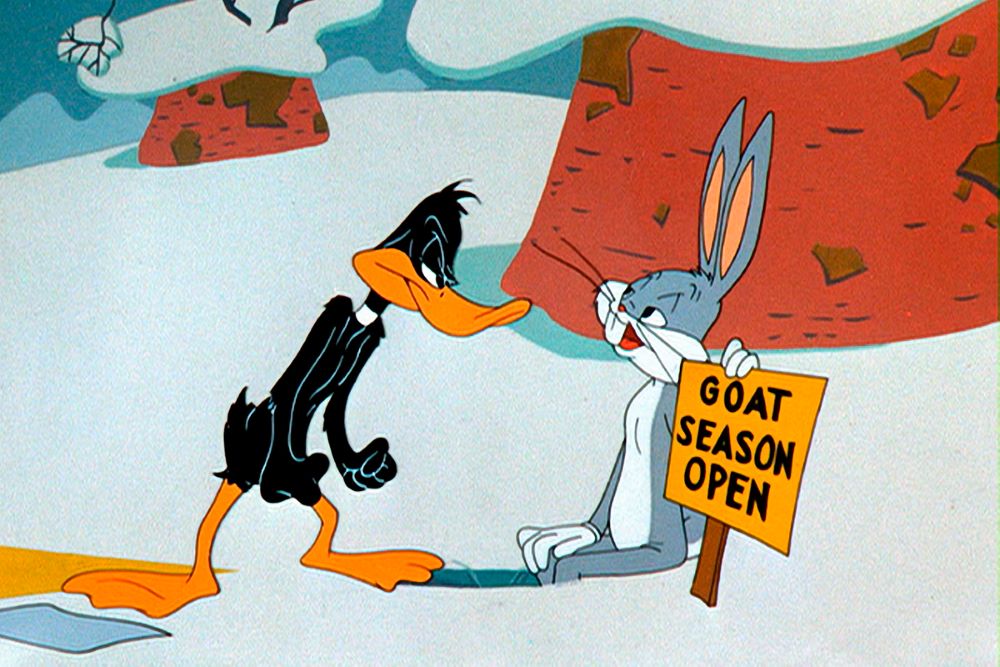
That’s followed at 10:30 pm by Tortoise Beats Hare (1941), Tortoise Wins by a Hare (1943) and Rabbit Transit (1947). Marvel at how each director (Avery, Bob Clampett and Freleng), brought his own look, feel and style of to Bugs and other characters. The feature at 11 pm: “Walk, Don’t Run” (1966), with Cary Grant (his final screen appearance) and Samantha Eggar.
In all, 45 classic Bugs Bunny cartoons will be shown during the week long tribute. Other Warner characters, such as Daffy Duck, Elmer Fudd, Yosemite Sam, the Road Runner and Wile E. Coyote, will also be featured. TCM plans to show them, as they do with their features, uncut and uncensored.
Eventually, TCM will showcase 750 cartoons from the vast Warners library of classics. Look for them to be contextualized as well as celebrated; remember, these ran seventy-plus years ago, and were made for adult audiences. When I first saw them, I didn’t know what the heck they were trying to say with all these jokes about war rationing and air raids. Ethnic stereotypes will likely keep a few films, such as Clampett’s infamous yet wildly entertaining Coal Black an de Sebben Dwarfs (1943), out of the mix.
Although, you never know. TCM has the right guy to put just about any of them in context: renown animation historian Jerry Beck, author of 15 books on animation including “The 50 Greatest Cartoons” (1994). Look for Beck next to Ben Mankiewicz and company. He is Bugs Bunny approved.



5 Comments
This is such a smart addition to TCM. Programming the shorts in groups of three ahead of an era-appropriate feature really recreates the classic theatrical experience. Can’t wait.
At the end of ‘Hurdy-Gurdy Hare” (1950), Bugs Bunny says, “”I sure hope Petrillo doesn’t hear about this.”
Until the internet and Wikipedia came along and I looked up the name (James Petrillo), I didn’t understand that reference for decades after first hearing it as a kid.
The deep cuts TCM is pulling from the Warners library here are a real treat—I especially love that they’re grouping the shorts by director so you can see how Avery’s chaos differs from Jones’s precision. Pairing *What’s Opera Doc?* with *A Night at the Opera* is a perfect double bill that really highlights the Marx Brothers’ cartoonish energy.
Great example Thosma.
TCM digging into the Warner Bros. vault is a treat for cartoon fans. Looney Tunes shorts hold up because of tight gags and sharp timing. If you enjoy quick daily brain breaks, dlenow offers free movie and trivia puzzles in that same Wordle spirit. Curious which shorts get featured.