
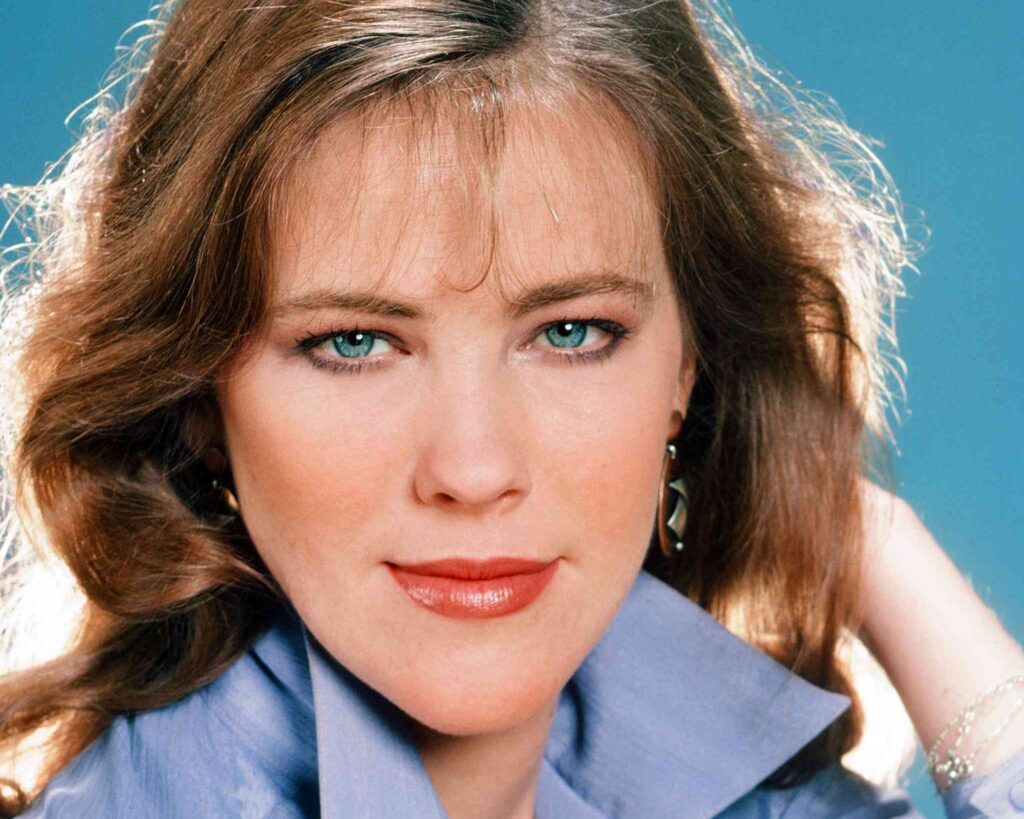
One of the emotional highlights of the recent documentary “John Candy: I Like Me” is a scene where Catherine O’Hara is delivering the eulogy at Candy’s funeral.
O’Hara stood at the podium at St. Basil’s church at St. Michael’s College on the University of Toronto campus and delivered a heartfelt remembrance of her friend. Candy died March 4, in 1994, on O’Hara’s birthday.
She finished by saying, “God bless dear John, our patron saint of laughter; God bless and keep his soul. I will miss him, but I hope and pray to leave this world too some day and to have a place near God, as near as any other soul, with the exception of John Candy.”
If that doesn’t sound like Heaven, I don’t know what does.
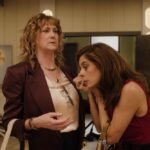
O’Hara died, Friday, Jan. 30, much too soon at 71. Early reports suggest she passed away at home after a short illness.
She came from a large Irish Catholic family of seven children. They were members of the same parish I grew up in, Our Lady of Peace in the west end Toronto suburb of Etobicoke. I’m not sure this was a place where you grew up seeing the humour in everything, but the pastor, Msgr. Percy Johnson, was a tall, ex-army chaplain who shook your young hand as you exited on the front steps until it turned into a rubber hose.
advertisement
I was three years younger and don’t really remember her at school; that was a big gulf back then. Years later, however, the fact that she went there made you feel connected to somebody special. I do remember my mom talking about what a character her mom was.
Several years later, I was doing a bit of standup and me and my buddy Pat Bullock did a skit on stage in the OLP church basement. We learned O’Hara was out front, so Pat announced we had a SCTV celebrity in the house — then said, “Stand up John Candy.” This shows why Bullock & Brioux never got out of church basements. O’Hara however, a good sport, stood and shook her fist at us.
Decades later I interviewed O’Hara at Pinewood studios in Toronto on the set of Schitt’s Creek. This was at some point during the first season, so probably in 2015. Told I had 15 minutes, I mentioned I also went to Peace and we spent 14 minutes talking about former principal Sister Martha Anne. That strap-happy nun stole all but one minute of our interview time.
That was probably fine with O’Hara. I spoke with her a few years later when the cast of Schitt’s came to Los Angeles to sit before reporters at a Television Critics Association press tour. Unlike some in the comedy business, O’Hara was never on. She was warm, friendly, and there to promote, but otherwise appeared happy to talk about anybody but Catherine O’Hara. Even about you.
To push the church thing further, it does seem miraculous that she was able to graduate out of Burnhamthorpe Collegiate, waitress a bit at the Old Firehall, and then — after impressing Candy at an interview — turn into Carol Burnett. I guess it helped that Candy, as well as Gilda Radner, Dan Aykroyd, Eugene Levy, Joe Flaherty, Dave Thomas, Andrea Martin and others, weren’t really those people yet either. They just all had a gift, and together, they became comedy evangelists.
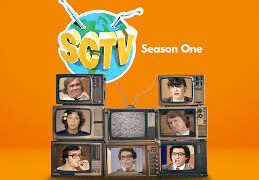
Between main stage gigs she got to open out of town a bit on some Canadian shows, going all the way back to some Wayne & Shuster specials and a ‘tween comedy directed by Trevor Evans and featuring Aykroyd called Coming up Rosie. Within months she was on SCTV, getting blown up real good as Brooke Shields, promising to “bear all your children” as Lola Heatherton, and screwing her head on right as Libby Wolfson’s pal Sue Bopper Simpson.
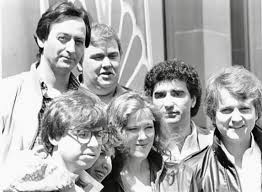
O’Hara and Martin were the strongest one-two female team in comedy since Lucy and Ethel. They could do anything, and they were so brilliantly different. Paul Shaffer, the Letterman bandleader who emerged from that same Toronto comedy hothouse, said that Martin taught all of them how to be funny. O’Hara was self taught, and had what Candy and the rest of them had, remarkable powers of observation and then this magic ability to turn into somebody else.
The history of SCTV includes more fractures than a rock band from the ’70s. (If you can find a copy, read Dave Thomas’ fantastic book “SCTV Behind the Scenes.”) People came and went and came back again, especially O’Hara. This turning into other people on a dime every week had to be intense and exhausting. “I swear I would look younger today if I hadn’t trained my face to look older than my own mother’s all those years ago on SCTV,” O’Hara once said.
What drew them back was the fact they were all artists and needed each other to make their art.
Modest and self-effacing, O’Hara told critics that she never got the kind of attention from SCTV that she got in later years for Schitt’s Creek (2015-2022). She pointed out that SCTV was always kind of “under the radar, airing in 90- then 30- and sometimes 60-minute chunks spread across several networks in the late ’70s, early ’80s. It was on and off,” she added. “We were in Toronto and Edmonton, all over the place.”
The people who originally watched SCTV, she added, “were stoned and watched it in college when it first came on at 2:00 in the morning.”
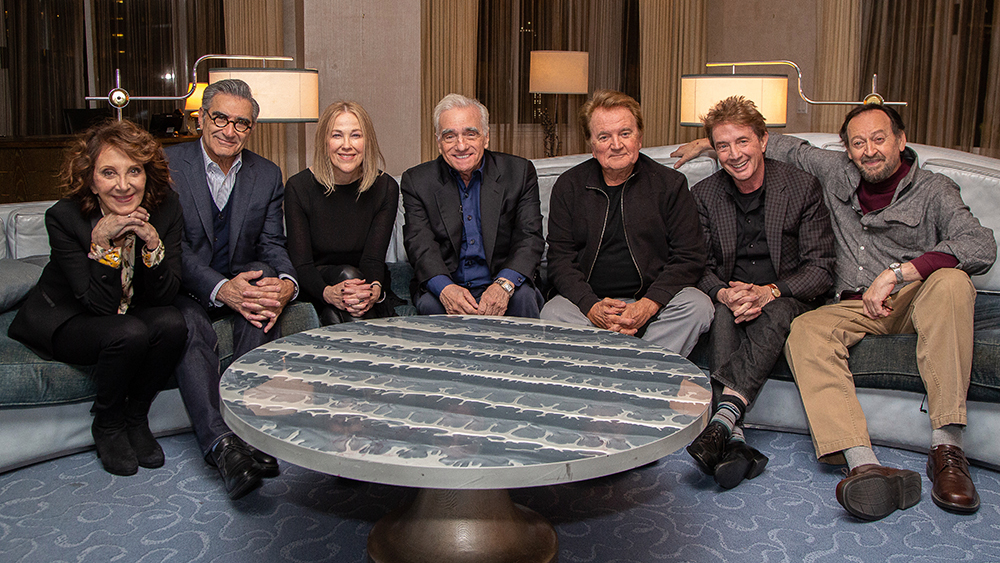
After SCTV, as well as reuniting with her core Canadians on special projects, O’Hara was drawn to other top creative partners. Often they were leaders in their fields. Martin Scorsese directed her in the 1985 movie “After Hours” (as Gail, a Mister Softee truck driver). Tim Burton featured her in “Beatlejuice” (1988) and as a voice in a pair of stop-motion films, “The Nightmare Before Christmas” (1993) and “Frankenweenie” (2012).
She was gold in five of the Christopher Guest/Eugene Levy films, assignments that took full advantage of her improv skills and ability to disappear into memorable characters. She is hilarious in “Best in Show” (2000) and heartbreaking opposite Levy as folk duo Mickey and Mitch in “A Mighty Wind” (2003). In these films she found a new improv troupe and was able to play with Fred Willard, Michael McKean, Jennifer Coolidge, Harry Shearer, Parker Posey, Bob Balaban, Don Lake and others. These films were uniquely funny as well as surprisingly profound love stories.
The “Home Alone” films were the blockbusters and they carry her reputation forward. There she got to be a mom, which she once said was the most important role of them all. She and her production designer husband Bo Welch — whom she met on “Beatlejuice” — and their two sons all worked in the business.
In between it all there are a surprising list of sitcom one-offs on significant shows. She answered the call to join her friends on things such as The Last Polka (1985), I Martin Short, Goes Hollywood (1989) and The Dave Thomas Comedy Show (1990). She pops into episodes of forgotten comedies that should have lasted longer such as The George Burns Half-Hour Comedy Hour (1985), Dream On (1990), and Rob Reiner’s Morton & Hayes (1991). She enhanced single episodes of enduring hits such as The Larry Sanders Show, Curb Your Enthusiasm, 30 Rock, and Modern Family.
She never phoned it in and was as impressive as ever in her final roles, including getting nominated for more Emmys (she has two) on both The Studio and The Last of Us. I can’t help but mourn what could have been, a season on Martin and Short’s Only Murder in the Building.
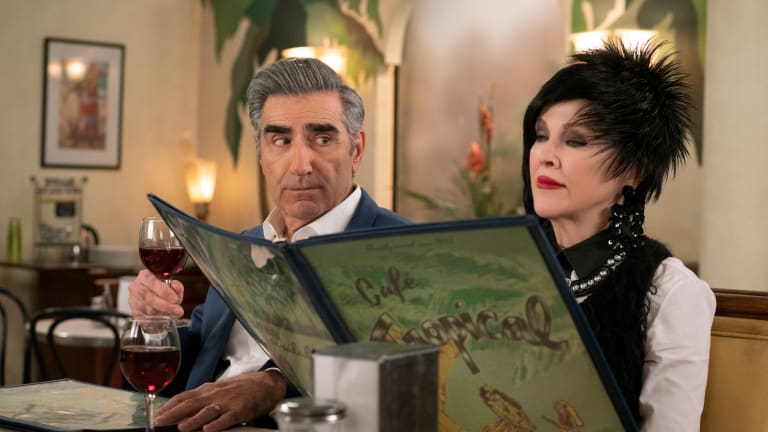
And she went through a lot of wigs. Asked what souvenirs she claimed once production wrapped on Schitt’s Creek, O’Hara admitted she grabbed some wardrobe as well as three wigs. “I took a few because I’m not Moira. I can’t pull it off like Moira can, much as I’d like to. I also don’t have proper storage for wigs. You have to take care of them.”
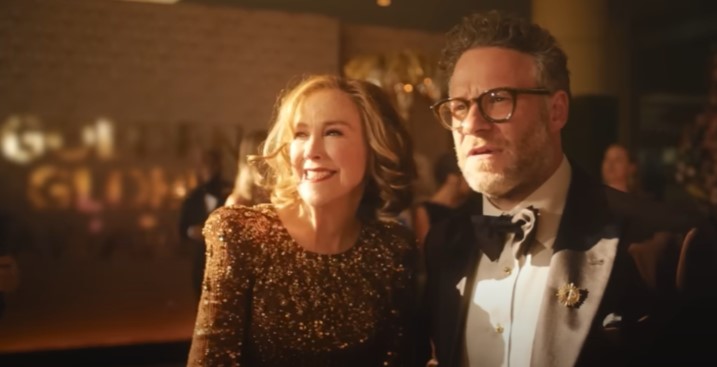
The outpouring of love and affection for O’Hara on social media in the hours since her passing washes away so many negative distractions today. Check it all out if you want to have a good cry. Among other accolades, Seth Rogen, co-creator of The Studio, tweeted: “…she made me want to make our show good enough to be worthy of her presence in it. This is just devastating. We’re all lucky we got to live in a world with her in it.”
Amen to that, and farewell, our lady of Peace.