


Before there was Saturday Night Live, MuchMusic or MTV, the really big shew with hottest music acts was The Ed Sullivan Show.
It began in 1948 as The Toast of the Town, with bold face newspaper columnist Ed Sullivan introducing, between the plate spinners, acrobats, comedians and a little puppet mouse named Toppo Gigio, everyone from The Beatles to Barbra Streisand; from Elvis Presley to The Mamas and the Papas.
Sullivan was no Ryan Seacrest. Stiff and awkward, he lurched from the wings of what was then CBS Studio 50 in Manhattan, mangling intros like John Travolta at The Oscars. He was nicknamed the Great Stone Face, and he made the careers of impressionists such as Frank Gorshin, John Byner, Rich Little and Will Jordan.
Nonetheless, he was the original Must See TV. Old or young, every Sunday at 8 p.m., the family would gather around their19-inch Admiral, Marconi or Zeinith and watch The Ed Sullivan Show.
The variety hour ran 23 seasons, ending rather unceremoniously in 1971, 54 years ago. What the new Netflix documentary Sunday Best: The Untold Story of Ed Sullivan does is give Ed his due. In an era when Black entertainers were scarce on TV, Ed Sullivan was truly a colour blind showman. He introduced North American audiences to the hottest acts, period, regardless of race or colour.
Sullivan grew up in Harlem, New York, back when it was a Irish-Jewish neighbourhood. He knew the sting of prejudice and racism, having lived through it himself. Even through those klunky introductions, what shone through was that he genuinely was a fan of the entertainers he presented, whether they were ballet dancers from Russia or James Brown. He even liked talent from north of the border, booking his “Canadian friends,” comedians Wayne & Shuster, more often than any other act on his series.
advertisement
It wasn’t just that Black entertainers did Sullivan; it was how they were seemlessly integrated into the mix. When Sullivan called former heavyweight champion Joe Louis up out of the audience, he shook his hand. When Sullivan gave Pearl Bailey a playful kiss on the cheek, the network got letters.
That Nat King Cole got the same kind of showcase that Vic Damone or Tony Martin got was different. Back in the late ’50s, Sammy Davis, Jr., had to come to Canada to find a network that would headline him on a TV special.
CBS worried some of their southern affiliates would dump the series. There were organized attempts to boycot automakers and other Sullivan sponsors. This was a time of great civil unrest, of protests and segregation and lynching and assassinations. Aside from nightly newcasts, television tended to look the other way. Yet CBS, a network that used to do such things, stood by Sullivan.
Not that the so-called Tiffany network was particularly enlighted in the Eisenhower/Kennedy/Johnson and Nixon years. That’s the same network that fired the Smothers Brothers in 1969. Sullivan’s super power was that he made money and headlines. The series was a Top-20 hit most of its run.
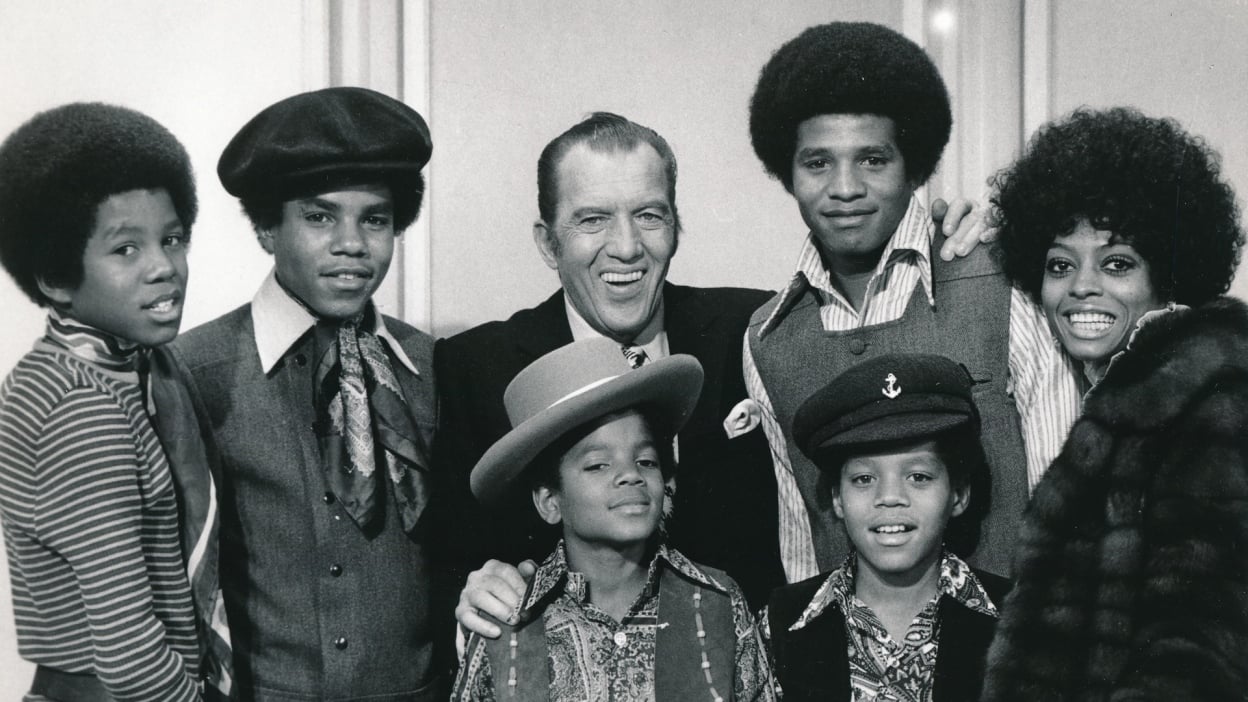
Besides the history lesson, the documentary features a clever A.I. trick: Sullivan’s voice, although not really his voice, narrates much of the feature. Sullivan’s words, some lifted from his newspaper columns, are heard, but thart distinct voice is an artificial intelligence simulation. Once upon a time they would have hired Byner or Little (both still with us), but this trick works, and look for it to be used a lot in other projects where the subjects themselves have moved on (as Sullivan did in 1974 at 73.)
The documentary doesn’t completely resort to fakery. A CBC interview, with This Hour Has Seven Days host Patrick Watson going one-on-one with Sullivan, is used extensively. The Canadian TV host/producer, who could be direct and bracing, peels back a softer side of the showman. Sullivan comes across as a savvy talent booker but also as humble and as surprised as anyone that he was at the centre of one of television’s true institutions.
If I have a complaint about the documentary it a rare one: it is too short. At an hour and 20 minutes, there was room for more music and context. Harry Belafonte, who died in 2023 at 96, is still weighing in on Netflix originals being released in 2025. As someone who Sullivan stuck his neck out for in the fifties, the singer-activist’s posthumous observations are welcome. Dionne Warwick, now 84, is also interviewed as are two surviving members of The Jackson 5, Tito and Jackie. Smokey Robinson, in the news of late at 85, also made the cut.
Missing, for me anyway, is some context from television commentators and critics. Eric Deggans, Bill Carter, even Kareen Abdul-Jabbar, could have shared their take on the times and Sullivan’s contribution not just to television but to culture and racial understanding.
The Netflix documentary is directed by the late Sacha Jenkins, and produced by Rafael Marmor and Sullivan’s granddaughter, Margo Precht Speciale. Kerry Gordy, the son of Motown Records founder Berry Gordy, is one of four executive producers, along with Andrew Solt, rights holder for all 1068 episodes of The Ed Sullivan Show.



2 Comments
Looks good. I will definitely watch this. Hope it gives our Wayne and Shuster their due.
This doc doesn’t; really more about Sullivan’s bold bookings of Black entertainers. I am doing a podcast episode with Sullivan’s granddaughter, however, will talk W&S and ED for sure.