
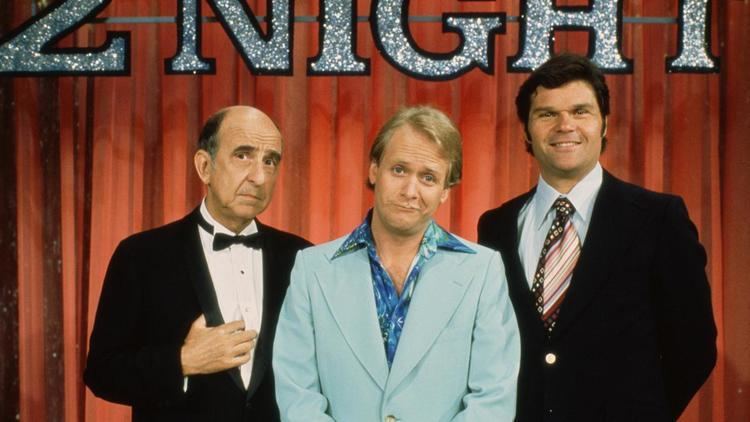
Before Late Night with David Letterman and within a year or two of Saturday Night Live and SCTV there was a little show that firmly planted the irony flag on the comedy landscape: Fernwood 2Nite.
This offshoot from the equally groundbreaking Mary Hartman, Mary Hartman deconstructed talk show television in a way rarely seen on TV before. Created by the great Norman Lear and produced by Alan Thicke, the series was purposely cheap and cheeky. Like all great cult shows, you felt like you were in on something new and wonderful whenever you watched it.
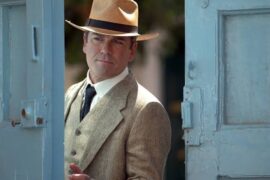
Much of the credit goes to Martin Mull, who died in 2024 at the age of 80. With his pastel leisure suits and whispy, so-blond-it-was-white moustache, Mull’s Bart Gimble was a cringe-worthy amalgam of many a local market talk show host.
That there was so much more to this groundbreaking artist is the premise behind Who Is Martin Mull? streaming now on Netflix. As magician Penn Jillette says on the doc, “Martin Mull was the absolute top of comedy — and that’s not what he did best.” More on that in a moment.
The project was initiated by fellow comedian Bob Saget, who appears throughout many of the interview segments as he walks Mull through his many milestones.
Here is the thing” Both Mull, who passed in 2024, and Saget, who died in 2022, are dead. So are several other famous and funny people featured in the documentary, including the late, great, Norman Lear (d. 2023) and Fred Willard (2020). You are struck by a) what has been lost of the comedy culture just in the past few years (add Catherine O’Hara, Rob Reiner, and Bob Newhart to a long list), and b) by what miracle did this 2026 documentary get interviews with all of the key people before they died?
advertisement
That they did, along with few key folks still with us (including Steve Martin, Tom Waits, Patton Oswalt, Seth MacFarlane, and David Alan Grier), tells a remarkable story about one singular artist. Back in the early ’70s, Mull was a comedian who emerged from the art school/college scene. A skilled guitarist and comedy songwriter, he set himself on stage surrounded by items you’d find in your parent’s living room; he even called his backup band, “The Furniture.”
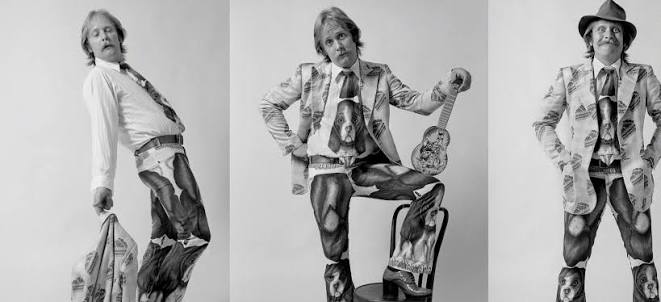
Dressed in pastel coloured suits and seated in a comfy, wingback chair, he perfected this laidback character who was a bit of an ass. He knew it, we knew it, and everybody laughed. Mull was Steve Martin before Steve Martin, a fact Martin readily acknowledges. The two toured together for a while, calling their act, “Steve Martin Mull.”
Soon Mull was the cool comic opening for rock acts such as The Beach Boys, Billy Joel and Bruce Springsteen. His shtick eventually caught the eye of Normal Lear, TV’s top comedy producer thanks to groundbreaking hits such as All in the Family. Lear, also seen in the doc, was taken by Mull’s “unusual talent” and noted that, “there was never any anger or hostility in his sarcasm.”
The Lear meeting led to Fernwood 2-Night, a spin off of Mary Hartman, Mary Hartman. Set in small town Ohio (where Mull was raised), the series set the template for many mocumentaries to follow, including “This is Spinal Tap,” the “Best in Show” films and The Larry Sanders Show.
Joining Mull’s Bart Gimble on the set was Fred Willard as clueless sidekick Jerry Hubbard. “Happy Kyne and the Mirthmakers” was the band. Mull and Willard made a tremendously funny modern comedy team, and it is heartening to see them as might-as-well-be brothers, looking back at all the fun they had. “Following him,” Mull says of improv legend Willard, “is like following someone who never uses his turn signals.”
Mull became an even bigger star. He guest hosted The Tonight Show starring Johnny Carson over 30 times. We see him jamming on guitar with blues legend B.B. King — and holding his own. He opened for Monty Python and kept popping up in small roles in everything from Taxi to features such as “Mr. Mom” and “Clue.”
All this took its toll and here comes the usual documentary second act — the booze, the failed early marriage, the dark family secret illuminated by Mull’s own siblings. Their famous brother refers to himself at this time as “a functioning alcoholic.” By 1980, we learn that he had “cratered.”
Here is what elevated Mull beyond the ordinary in yet another way: there is an amazing soul-lifting redemption that includes, but goes way beyond, a career in comedy. This man was a true artist, a gifted, and prolific painter. Carson raved, on air, about the paintings. Steve Martin, a lifelong collector, has lost track of how many “Mulls” he owns. The artist’s hyper realism phase will have you convinced he was painting over photographs. Mull saw all of the comedy work he was famous for as simply a means to an end. He built an incredible studio in a beautiful house, got up at 7 am each morning, and sometimes painted all day.
Helping him achieve this was his third wife Wendy Haas. A gifted pianist and rock star in her own right, they were married for 42 years. The true love story is such a bonus. Their grown daughter Maggie, a co-executive producer on Family Guy, grew up finishing doodles her dad began and is shown to have the same deft artistic eye.
Mull still had time to squeese in appearances on Roseanne (where he was reunited over several seasons with Willard as a gay couple), Arrested Development (as “Gene Parmesan”), Veep, and Family Guy. He did his own series, the 1985 HBO mocumentary The History of White People in America plus later sitcoms Dads (2013-14) and The Cool Kids (2018-19).
I spoke with Mull in LA during a Television Critics Association press tour where he was promoting Dads, which also starred Seth Green and Giovanni Ribisi. Down-to-earth friendly and unassuming, Mull was happy to take a bow for Fernwood, and agreed it was a crime the series was never released on any home format although he believed it did get rerun for a year or so on TV Land. “It may have outlasted its time,” he modestly suggested.
The documentary provides one last gift, a mediation on aging. Mull’s health was failing as the cameras rolled. Losing friends along the way also took its toll. “You wake up knowing you’re driving a used car,” he says. The film leaves us with some final thoughts, and why spoil them here. Just know they are as profound and life affirming as his paintings.
Say a quiet thanks to Bob Saget for pushing this heartfelt passion project forward, and to co-director Neil Berkeley for completing it. (Berkeley’s next project, a documentary on comedienne Maria Bamford, premieres Oct. 23 on Netflix). Kevin S. Bright and Morgan Neville joined Saget, who died at 65 in 2022, as executive producers.