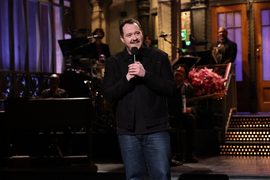

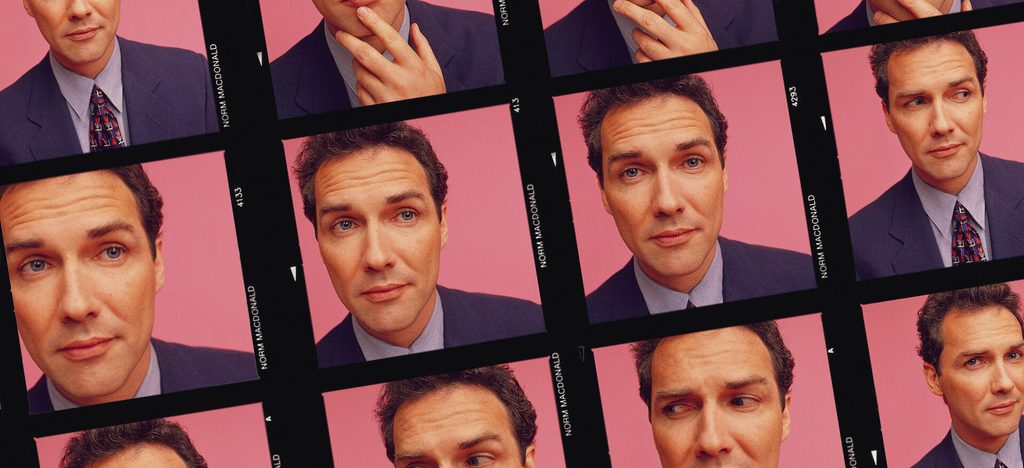
The Tale of Norm Macdonald, streaming now on Netflix, is two hours of clips you’ve watched and laughed out loud at a dozen times or more on social media. We see all the Hall of Fame moments: the final Letterman appearance; the time Macdonald ridiculed Carrot Top and Courtney Thorne-Smith on Conan O’Brien; the relentless, just-begging-to-be-fired-by-NBC taunts of O.J. Simpson on Saturday Night Live’s Weekend Update.
The point director and executive producer Judd Apatow seems to be making is that, even though Macdonald succumbed to cancer – an illness he kept hidden for nine years – and left us in 2021, he never really left us. If you are looking to find the man behind the deadpan, however, you may have to keep surfing the internet.
Apatow has been a one man documentary machine of late, producing the recent homage to Canada’s enduring gift to comedy, SCTV: The Greatest Show You Haven’t Heard Of, as well as a new doc Paralyzed by Hope: The Maria Bamford Story, also on Netflix. His 2014 look at his former Larry Sanders Show boss Gary Shandling remains the most penetrating and fascinating peek inside the mind of a comic ever.
Macdonald, however, does not make it easy for any biographer. The Quebec City native was seldom on the level about his own history. He lied or was at least disingenuous about his age, sexual orientation (needlessly insisting he was “deeply closetted”, meaning “not gay”), and level of education. His 2016 book “Based on a True Story: Not a Memoir,” was exactly that, a weird mix of truth and outrageous fiction.
I covered Macdonald for many years, starting with an interview 30 years ago in his Saturday Night Live office in Rockefeller Plaza, through his two TV sitcoms, and late in his career at Just for Laughs in Montreal. When I asked him in LA on the set of his ABC series if the name of his character Norm Macdonald was drawn from two former members of the Toronto Maple Leafs – Norm Ulman and Paul Henderson – he congratulated me for being the only one to get it. Or was he putting me on?
I also wrote a long feature for The Globe and Mail on Norm and his big brother Neil, the CBC Washington correspondent who, by both their accounts, was the funny one in the family.
advertisement
The Macdonald boys are in the documentary. Apatow also uses a bit of home footage to show Macdonald in his later years with his son as well as his mother. Several of his comedy peers comment through clips, including SNL cast mates David Spade, Adam Sandler and Molly Shannon.
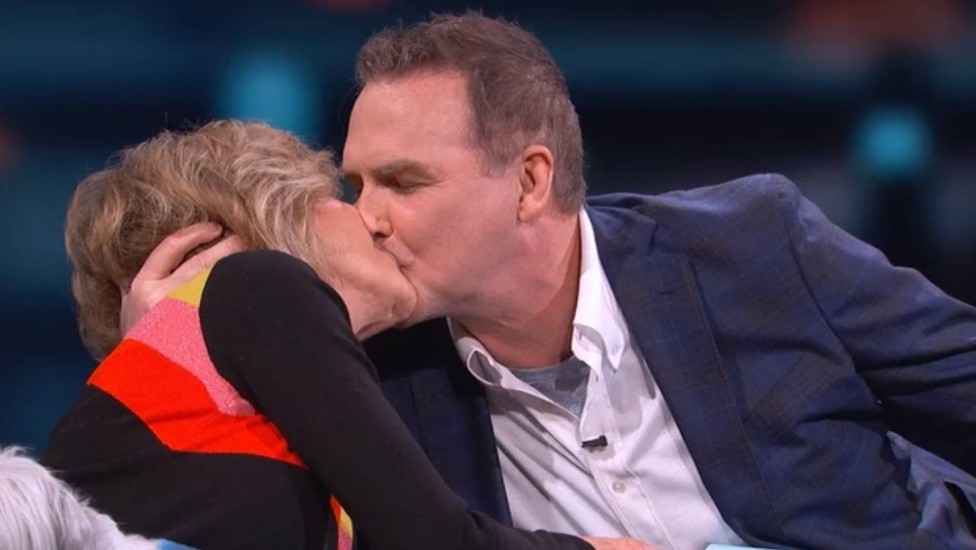
There are also clips from Norm Macdonald Has a Show, a wonderfully uneven 2018 Netflix effort. The series was so stripped down it was barely more than a podcast. There was no studio audience, just a crew, although the guests were big names, including Lorne Michaels, David Letterman and Jane Fonda. At the end, Macdonald and her sidekick Adam Eget stood and sang Wayne & Shuster’s goodbye song, as if the whole deal did not already seem Canadian enough.
On the Fonda show, Macdonald planted a long kiss on the lips of the then 80-year-old two-time Oscar winner. It was a fabulous kiss, the kind of chance you take if you know you’re going to die soon anyway. It is not in the doc, but see the evidence below:
Macdonald conducted his career in much the same way. When he was a celebrity contestant on Who Wants to Be a Millionaire, host Regis Philbin had to talk him out of guessing on a final answer that would have won a million bucks. Instead, Macdonald’s charity, Paul Newman’s Hole in the Wall camp, had to settle for half a million.
The lifelong gambler wrote in the final chapter of his sort-of memoir that, “if you’re at the table and you’re rolling them bones then there’s no money in playing it safe.” Some would see that as reckless, others heroic.
The Tale of Norm Macdonald does a nice job of graphically displaying some of Macdonald’s later sit-down humour, tapped out over Twitter. He amassed on what is now known as X a following of over 1.1 million followers.
What he was typing between stand up gigs, however, crammed a lot of depth and sensitivity into 140 characters. His tweets about the death of Robin Williams moved many of us to tears.
Apatow does not have the time to get specific on much of this, including a dozen or so tweets – later pulled down – about a meal Macdonald once shared with Bob Dylan. For me, The Tale of Norm Macdonald could have been longer, in two parts, similar to Gary Shandling’s documentary.
That Macdonald left behind such a legacy of original, eccentric humour spread over decades of fearless free speech seems even more precious now than ever. In a world where audiences are more divided than ever politically, it makes you wonder how Macdonald – who found ways to make fun of Hitler’s dog – would have navigated it. The only sure bet would be that he would not have played it safe.